ABOUT ARVON
We have been on the other side of the audit.
ARVON Alloys Inc. supplies nickel alloys, duplex and super duplex stainless, superaustenitic and titanium grades to manufacturers, repair shops and distributors in North America — as principal and importer of record.
How we work
Understand the application
Service environment, governing specification and edition, drawing revision, quantity, delivery condition and acceptance criteria — the points a complete enquiry has to settle.
Define the supply route
Match product form, melting route and manufacturing route to the component. A forging requirement is not satisfied by bar stock machined to shape.
Verify documentation
Heat and lot numbers reconciled across every certificate, measured chemistry checked element by element, actual furnace records where the part is critical.
WHY WE READ A SPECIFICATION THIS WAY
We bought these grades
before we sold them.
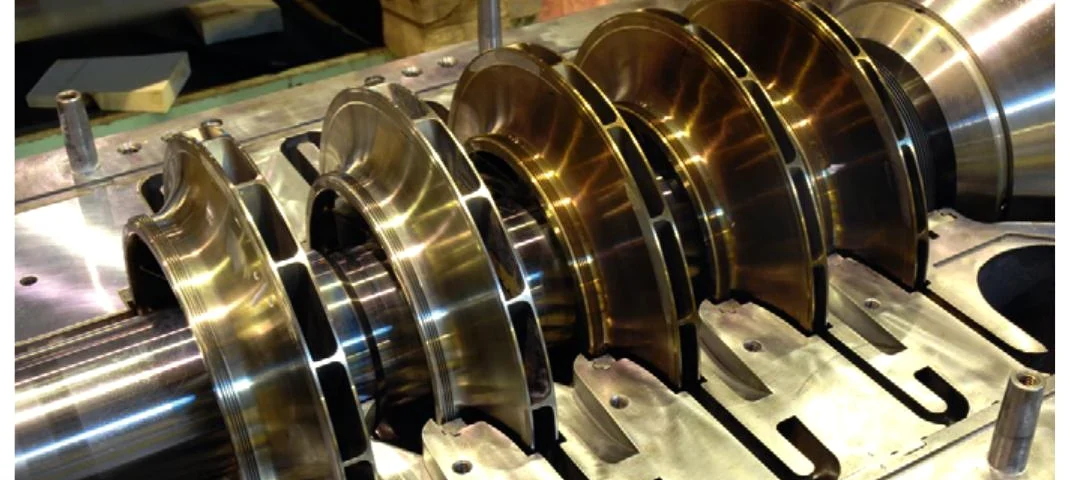
For twenty-five years these grades arrived as somebody else’s delivery, and they had to work. Forgings, bar and plate bought against ASTM and customer specifications, inspected on receipt, and built into centrifugal compressor and blower rotors that then had to pass the customer’s audit. Rejecting a heat was not a theoretical exercise; it was a delivery date.
A certificate had to survive our own incoming inspection
When the part is yours, a certificate that does not reconcile is not a paperwork problem. It is a batch you cannot use, a delivery you cannot make and a customer who is already waiting. Reconciling heat numbers across every document, and checking measured chemistry element by element against the actual furnace record, is a habit that came from needing the material to work.
The questions on this site are the ones we were asked
Customer audits, witness points, first-article inspection, procedure qualification — from the side that had to pass them, for equipment where a failure is not a warranty claim. The enquiry questions on this site are specific because they are the questions that were asked of us.
Construction picks the grade, not only the service
The impellers above are welded, which puts them in precipitation-hardening and martensitic stainless territory — the 17-4PH family. In our own impeller work the nickel alloys went into wheels cut from solid — open, or closed on five axes — rather than into a fabricated joint. That is a design practice for this kind of part, not a statement about whether the alloy can be welded. A grade chosen from the service envelope alone, with no regard for how the part is made, produces a specification the shop cannot meet.
COMMERCIAL BASIS
How we trade.
Principal, not agent
We buy and resell on our own account as importer of record, handling customs clearance, duty and origin declaration. One counterparty, one invoice, no commission structure splitting responsibility between a trader and a mill.
Honest origin declaration
Country of melt and country of origin are declared accurately on every shipment. If your end client maintains an origin restriction or an approved mill list, tell us at RFQ stage and we will quote to it or decline it.
Commercial terms are settled per enquiry, against the scope and the documentation the order actually requires.
WHAT GUIDES OUR WORK
Focused on your requirements.
Documentation
Heat-to-part traceability, actual heat-treatment records and NDT reported against a named acceptance class.
Supplier Qualification
We evaluate material suppliers and manufacturing partners based on documented capabilities, process controls and project-specific quality requirements.
Single Responsibility
Individual steps may be subcontracted. Traceability and final release authority are not.
LET’S DEFINE YOUR NEXT REQUIREMENT