
WHAT WE SUPPLY

Material, blank,
or finished part.

Three depths of supply against the same specification stack. Which one makes sense is a question about where the machining cost sits — and it can be answered part by part, not once for the whole account.

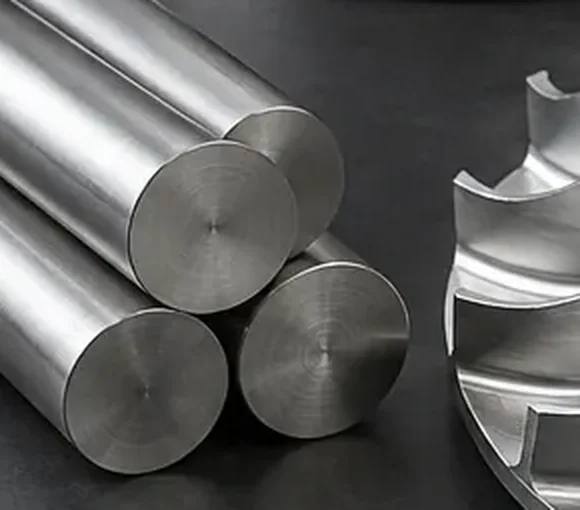
Turned end faces of alloy bar stock beside a finished impeller
Bar · Plate · Tube & Pipe · Forgings · Build-to-Print Components

THE SAME MATERIAL, THREE DEPTHS

How far down the chain
you want us is your call.

Each tier takes one more step off your own shop floor; the form — bar, plate, tube, pipe — is a separate question answered inside the first one. Nothing about the way a specification is settled changes between them — the grade, the condition and the acceptance basis are settled the same way whether you are buying a cut bar or a finished shaft. What changes is who carries the machining, the material waste and the inspection.

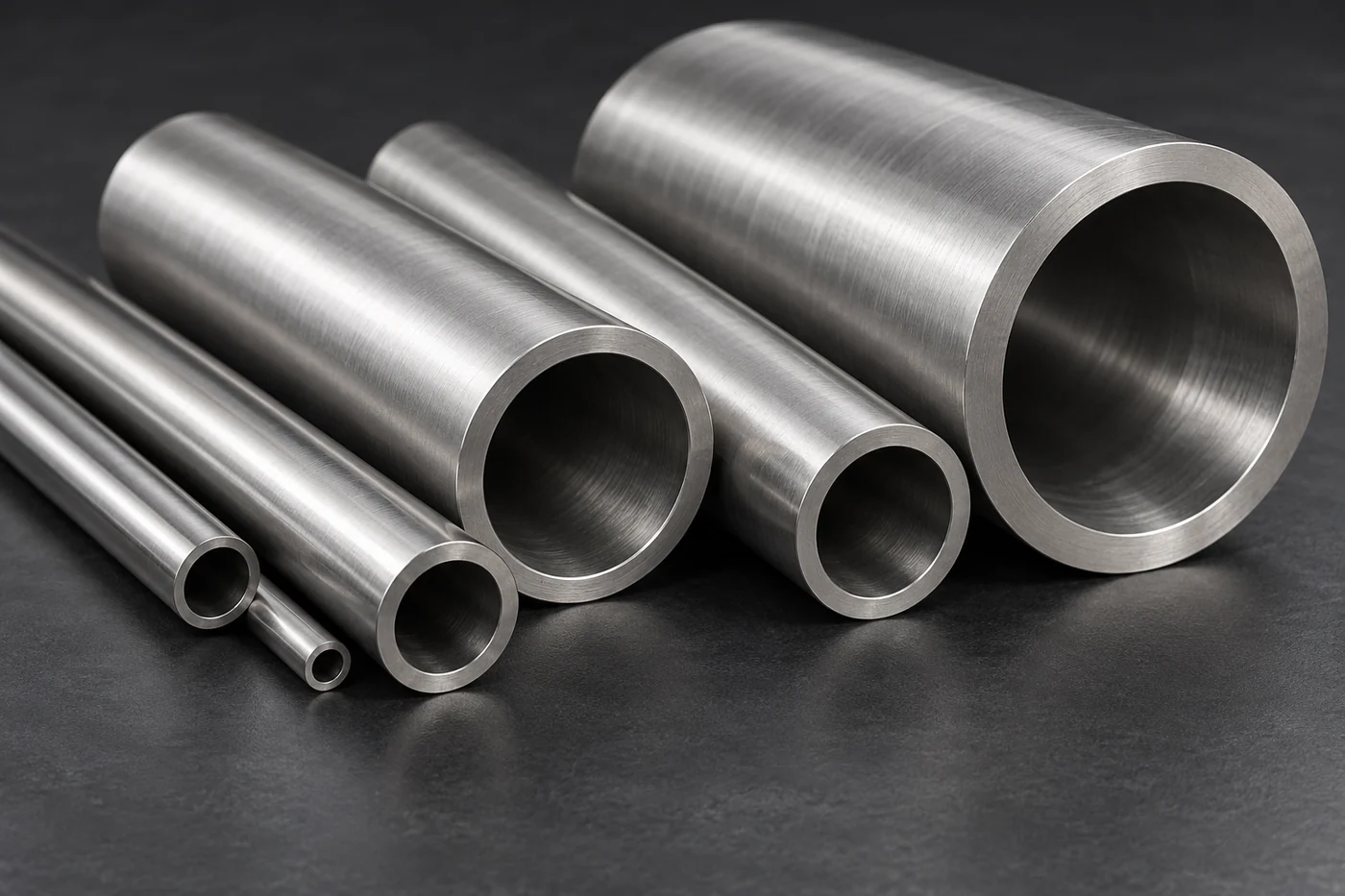
Seamless alloy tube and pipe in a range of diameters and wall thicknesses01 / MILL PRODUCT

Bar, Plate, Tube & Pipe

Alloy 625 and 718, C-276, Alloy 22, 825, X-750 and the titanium grades — supplied in the form the job actually needs, and in the delivery condition the governing specification names rather than the one that happened to be in stock. Bar for parts machined from solid. Plate for vessels, towers and fabricated equipment. Tube and pipe for exchangers, condensers and process piping — where the OD, the wall and seamless-versus-welded are all part of the specification, not details to settle later.

Trade name and UNS cross-reference

Who buys it
Bar: CNC machine shops, valve and pump manufacturers who machine from solid. Plate and tube: heat-exchanger and process-equipment fabricators, and the shutdown contractors who retube and re-line them — pulp mill bleach plants, chemical process, seawater and condenser duty.
Settled before quoting
Grade and UNS number, governing specification and its edition, delivery condition, certificate level (EN 10204 3.1 or 3.2). Then whatever the form adds: cut tolerance and squareness on bar; thickness tolerance, flatness and surface condition on plate; OD, wall, length, straightness and seamless or welded on tube and pipe — and tube is not pipe. Tube is ordered by actual OD and wall; pipe by NPS and schedule, where the NPS number is a label rather than a measurement. A 2″ tube is 2.000″ OD; NPS 2 pipe is 2.375″. Titanium splits them as B338 (tube, seamless or welded) against B861 and B862 (pipe); the nickel alloys split the other way, B622 covering seamless pipe and tube together while B619 and B626 separate the welded ones. Tubesheet hole dimensions follow the tube OD and the tube-to-tubesheet joint design, so an exchanger was built around one of those conventions, not the other.

Identification transfer at cutting is the one link in the traceability chain that sits with the distributor — not with the mill, and not with you. A bar loses its identity the moment it is cut unless someone carries the heat number across. Every piece that leaves here carries its own.
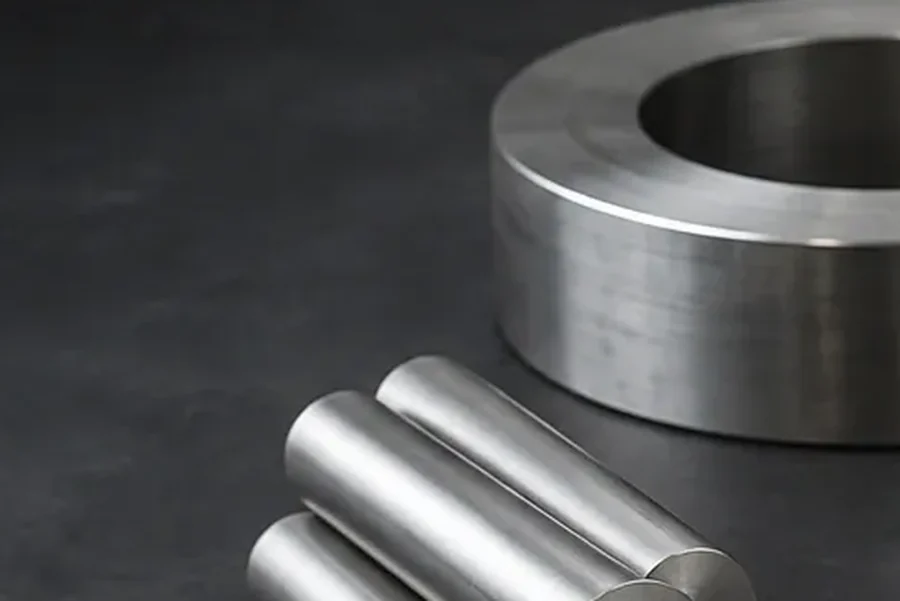

A forged ring and alloy bar stock02 / SEMI-FINISHED

Forgings & Rough-Machined Blanks

Forged bar, blocks and rings, forged discs and tubesheet blanks, near-net-shape forgings, and rough-machined blanks. The argument is buy-weight: a shop turning a 100 mm bar down to a 60 mm shaft pays for the material it converts to chips, and pays again for the hours that remove it. In C-276 or 2507 both of those numbers are large, and the chips come back at a fraction of bar price.

Who buys it
Manufacturers that already have finish-machining capability and want the material waste and the roughing hours off their own spindles.
Settled before quoting
Machining allowance per surface, datums, delivered condition — and the one that decides whether the blank is usable at all: whether heat treatment comes before or after rough machining.

For the solution-annealed grades the quench rate is set by the section actually being quenched. Solution annealing a heavy forging and rough machining afterwards is not the same product as rough machining first and annealing the reduced section — though both arrive stamped with the same grade against the same specification. The sequence belongs on the purchase order, not in an assumption.

A component being finish-machined on a five-axis machining centre03 / FINISHED

Build-to-Print Components

Finished parts to your drawing — pump shafts, valve stems, sleeves, wear rings, valve trim and other precision rotating and sealing components. ARVON does not operate a machine shop: this work is placed with qualified manufacturing partners, and the traceability and the final release stay with us.

Who buys it
Small and mid-size OEMs, independent MRO shops, and equipment manufacturers outsourcing machining capacity.
Settled before quoting
Drawing revision, inspection level, first-article requirement, dimensional report format, and what happens to a nonconformance before it happens.

At this tier ARVON sits in your quality system as a manufacturing supplier, not a material supplier. The certificate has to trace to the finished part, not only to the bar it started as. Shafts and stems in sour service carry an MR0175 hardness ceiling the finished condition has to meet — not the bar. And a wear ring is specified against the hardness of the part it runs against, never on its own.

These are one decision, not three product lines.

Where ARVON stops and your shop starts is a commercial question about where the cost sits most efficiently, and the answer can differ between two parts on the same purchase order. A shop that buys bar for its high-volume work and near-net forgings for the two parts that eat the most spindle time is using this correctly.

BEFORE YOU ENQUIRE

What an enquiry needs
at each depth.

A grade and a dimension is enough to start a conversation. It is not enough to quote against — and the gap grows with each tier.

TierMinimum to quoteWhat moves the price after the fact if it is left open
Bar, Plate, Tube, Pipe01 / Mill productGrade and UNS · governing specification and edition · form · dimensions and tolerance · quantity · certificate levelDelivery condition, test direction, seamless-versus-welded on tube and pipe, and whether 3.2 witnessing is required — 3.2 cannot be added to a heat after the fact
Forgings & Blanks02 / Semi-finishedEverything above, plus the finished part envelope · machining allowance per surface · datums · heat-treatment sequenceForging reduction ratio, grain-flow requirement, and the anneal-before-or-after question — each of which can change the forging route entirely
Build-to-Print03 / FinishedEverything above, plus drawing and revision · inspection level · first article · dimensional report format · surface finishHardness ceilings for sour service, mating-part hardness for wear surfaces, and NDT acceptance class — all of which are properties of the finished part, not the bar

The 90-second version: send the drawing and the service environment. Everything else can be worked out from those two.

LET’S DEFINE YOUR NEXT REQUIREMENT

Start with the specification.

Prepare an RFQ